Economic Insights | MPC Update
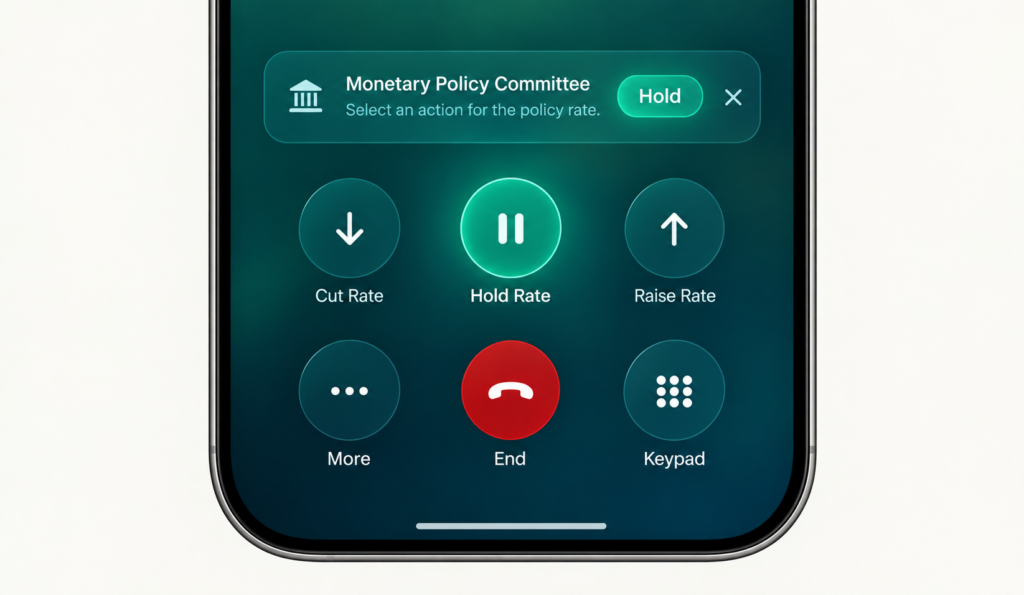
132nd MPC Update and Outlook: MPC Holds Policy Rate at 14.0% as External Pressures Limit Room for Further Easing
The Bank of Ghana’s Monetary Policy Committee (MPC) maintained the Monetary Policy Rate at 14.0% for a third consecutive meeting, in line with our expectation, as external risks continue to limit the room for further monetary policy easing.
Headline inflation stood at 5.0% in August 2026, while Core 1 inflation, excluding energy and utilities, eased to 4.2%. Real GDP growth remained resilient, expanding by 6.0% in Q2-2026.
Meanwhile, Gross International Reserves (GIR) declined to USD11.07 billion, equivalent to 4.2 months of import cover, in August, before recovering to USD12.05 billion, or 4.5 months of import cover, in September 2026.
Elevated crude oil prices and tighter global financial conditions continue to pose risks to the cedi and inflation outlook. We view the decision to maintain the policy rate at 14.0% as appropriate, allowing the Bank of Ghana to support external stability while inflation remains below the target band and domestic growth remains resilient.
Ghana Monetary Policy Rate: MPC Decision and Outlook
The 14.0% Monetary Policy Rate has now been maintained for a third consecutive MPC meeting following the significant easing cycle that saw the policy rate decline from previous highs.
The latest decision reflects the balance between improving domestic inflation and growth conditions and continued external pressures.
Unpacking the MPC’s Policy Decision
We believe the hold decision reflects a balanced response as inflation pressures build, while headline inflation is expected to remain sticky in the near term before gradually converging towards the medium-term target.
Headline inflation remains below the Bank of Ghana’s target band, while core inflation has eased and economic growth remains resilient. These conditions provided little justification for a rate hike.
At the same time, the external position limits the room for further easing. Reserves remain below their March peak, while the current account is expected to weaken in Q3-2026 due to elevated crude oil prices and tighter global financial conditions. These factors continue to pose risks to the cedi and inflation outlook.
In our view, maintaining the policy rate at 14.0% allows the Bank of Ghana to preserve external stability without unnecessarily tightening domestic conditions.
Ghana Inflation and Economic Growth
Recent economic data continue to show relatively contained domestic inflation alongside resilient economic activity.
Headline inflation was 5.0% in August 2026, while Core 1 inflation, excluding energy and utilities, declined to 4.2%. Real GDP expanded by 6.0% in Q2-2026, highlighting continued resilience in domestic economic activity.
With inflation remaining below the Bank of Ghana’s target band and growth remaining resilient, the latest data do not point to a need for additional monetary tightening.
However, external developments remain an important consideration for the monetary policy outlook.
Ghana Reserves, Trade Balance and Cedi Performance
We view the recent weakening in external flows as the main near-term constraint on monetary policy, despite a still strong cumulative trade position.
The trade surplus increased by only USD0.17 billion between June and August, while August recorded a USD90.5 million monthly deficit.
Gross International Reserves fell to USD11.07 billion in August from USD14.16 billion in March, before recovering to USD12.05 billion, equivalent to 4.5 months of import cover, as at 22 September 2026.
The cedi was also 9.5% weaker against the US dollar year-to-date as at 18 September.
The recovery in reserves is encouraging, but further reserve rebuilding remains important ahead of the expected increase in foreign exchange demand towards year-end.
Ghana Fiscal Position and Government Borrowing
We believe fiscal performance remains supportive, although higher borrowing activity in Q4-2026 may present upside pressures to debt levels.
The primary balance recorded a commitment surplus of 1.4% of GDP through July 2026, while public debt increased to 45.9% of GDP from 44.7% at December 2025, driven by higher domestic debt.
Heavier domestic borrowing and increased government spending in Q4-2026 could tighten liquidity conditions and push market yields higher.
Ghana Banking Sector: Credit Growth and Asset Quality
We believe banking sector asset quality continues to improve, although capital buffers are easing as credit expands.
Advances grew by 35.5% year-on-year in August, while the Non-Performing Loan ratio declined to 15.7% from 20.8% a year earlier.
The net interest margin remained at 9.6%, while the capital adequacy ratio declined to 19.1% from 22.3% in April. Despite the decline, the ratio remains above the 13.0% prudential minimum.
We expect strong credit growth to support bank earnings, but continued loan expansion will place further pressure on capital buffers, making capital generation an increasingly important differentiator across banks.
MPC Outlook: External Stability Remains Key
The MPC’s decision to maintain the Monetary Policy Rate at 14.0% reflects the contrasting signals from the domestic and external economy.
Domestic conditions remain supportive, with inflation at 5.0%, core inflation at 4.2% and Q2-2026 real GDP growth at 6.0%. However, external pressures, including elevated crude oil prices, tighter global financial conditions, reserve movements and cedi performance, continue to limit the room for further easing.
The recovery in Gross International Reserves to USD12.05 billion provides some support, although continued reserve rebuilding remains important ahead of the expected increase in foreign exchange demand towards year-end.
Keywords: Bank of Ghana, BoG, Monetary Policy Committee, MPC, 132nd MPC, Ghana policy rate, Ghana interest rates, Monetary Policy Rate Ghana, Ghana inflation, Ghana GDP growth, Ghana cedi, Ghana reserves, Ghana banking sector, Ghana economic outlook, Ghana monetary policy outlook, Q2 2026 GDP, August 2026 inflation, Ghana financial markets.