Ghana Inflation Update – September 2026
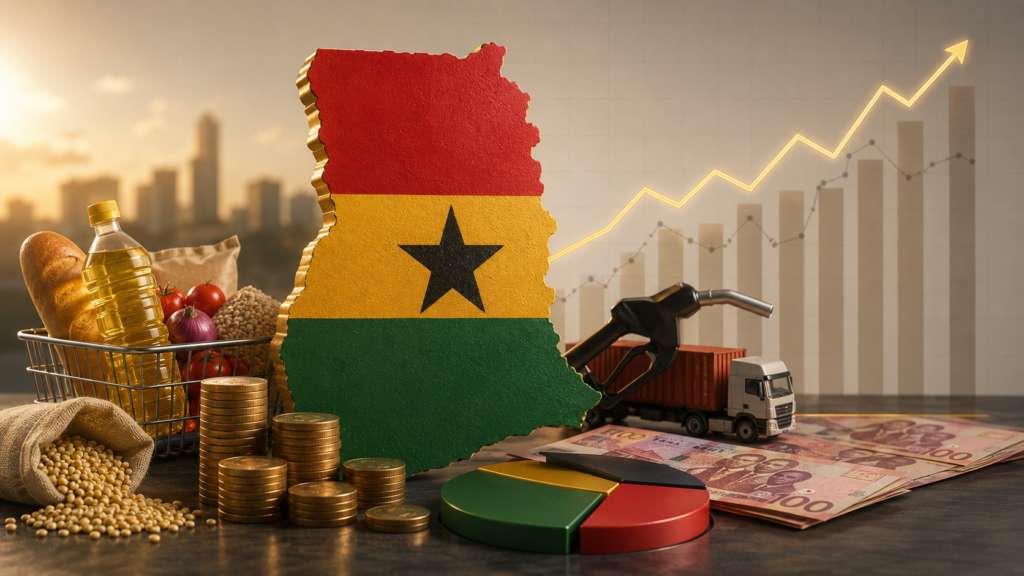
Ghana Inflation Rises to 5.2% in September 2026 as Food Prices Rebound
Ghana’s headline inflation increased to 5.2% in September 2026 from 5.0% in August, as rising food prices reversed the previous month’s decline in consumer prices. The latest reading was broadly in line with our forecast of approximately 5.1%, within a range of 4.9% to 5.3%.
The Consumer Price Index (CPI) increased by 1.1% month-on-month (m/m) in September, reversing the 1.0% decline recorded in August. The rebound was primarily driven by food prices, while non-food and services inflation moderated on a year-on-year basis.
We expect headline inflation to rise further to approximately 6.6% in October 2026, within a range of 6.1% to 7.2%, as transport fare adjustments and higher fuel prices feed into the next inflation reading.
Unpacking Ghana’s September 2026 Inflation Figures
Ghana’s headline inflation increased by 20 basis points to 5.2% year-on-year (y/y) in September 2026 from 5.0% in August, marking the second consecutive increase following the July decline.
The CPI rose to 271.5 from 268.5, translating into a 1.1% m/m increase in the general price level. Food was the main source of the change, as food and non-alcoholic beverages inflation rose to 4.0% y/y from 3.0%. Food prices increased by 1.5% m/m after declining by 2.6% in August.
Non-food inflation, by contrast, eased to 6.2% y/y from 6.8%. Monthly non-food inflation was reported at 0.6%, compared with 0.5% in August.
Goods inflation increased to 4.2% y/y from 3.8%, with goods prices rising by 1.1% m/m. Services inflation eased to 8.3% y/y from 8.6%, although services prices continued to rise, increasing by 0.8% m/m.
Services therefore remain the stickier component of the inflation basket. However, the September figures indicate that the strongest near-term price pressures came from food and goods rather than services.
At the divisional level, food once again became the largest contributor to headline inflation, accounting for approximately 36.2% of the national rate. Housing, water, electricity, gas and other fuels remained another major contributor, accounting for approximately 25.2%.
Transport inflation eased to 5.7% y/y from 7.6%. Nevertheless, the category remains important to the near-term outlook because the approved transport fare increase took effect late in September and is expected to be more visible in the October inflation reading.
Our Views and Inflation Outlook
We believe the September inflation print confirms that Ghana’s earlier disinflation phase has largely run its course, with headline inflation now drifting higher from its March low.
The decline in monthly prices recorded in August was encouraging, but it was not sustained. In September, the national basket became more expensive, with food, goods and locally produced items recording firm monthly increases.
This does not point to runaway inflation, but it suggests that the low inflation readings recorded during the first half of 2026 are unlikely to return in the near term.
We expect headline inflation to increase further to approximately 6.6% in October 2026, within our forecast range of 6.1% to 7.2%. The expected increase reflects the anticipated pass-through from transport fare adjustments and higher fuel prices into consumer prices.
The September reading therefore marks a further increase in headline inflation, with the rebound in food prices and the expected impact of transport and fuel costs shaping the near-term outlook.
Keywords: Ghana inflation September 2026, Ghana CPI September 2026, Ghana inflation rate, September 2026 inflation report, Ghana food inflation, Ghana non-food inflation, Ghana economic outlook, October 2026 inflation forecast, Ghana consumer price index, Ghana macroeconomic outlook, inflation in Ghana.